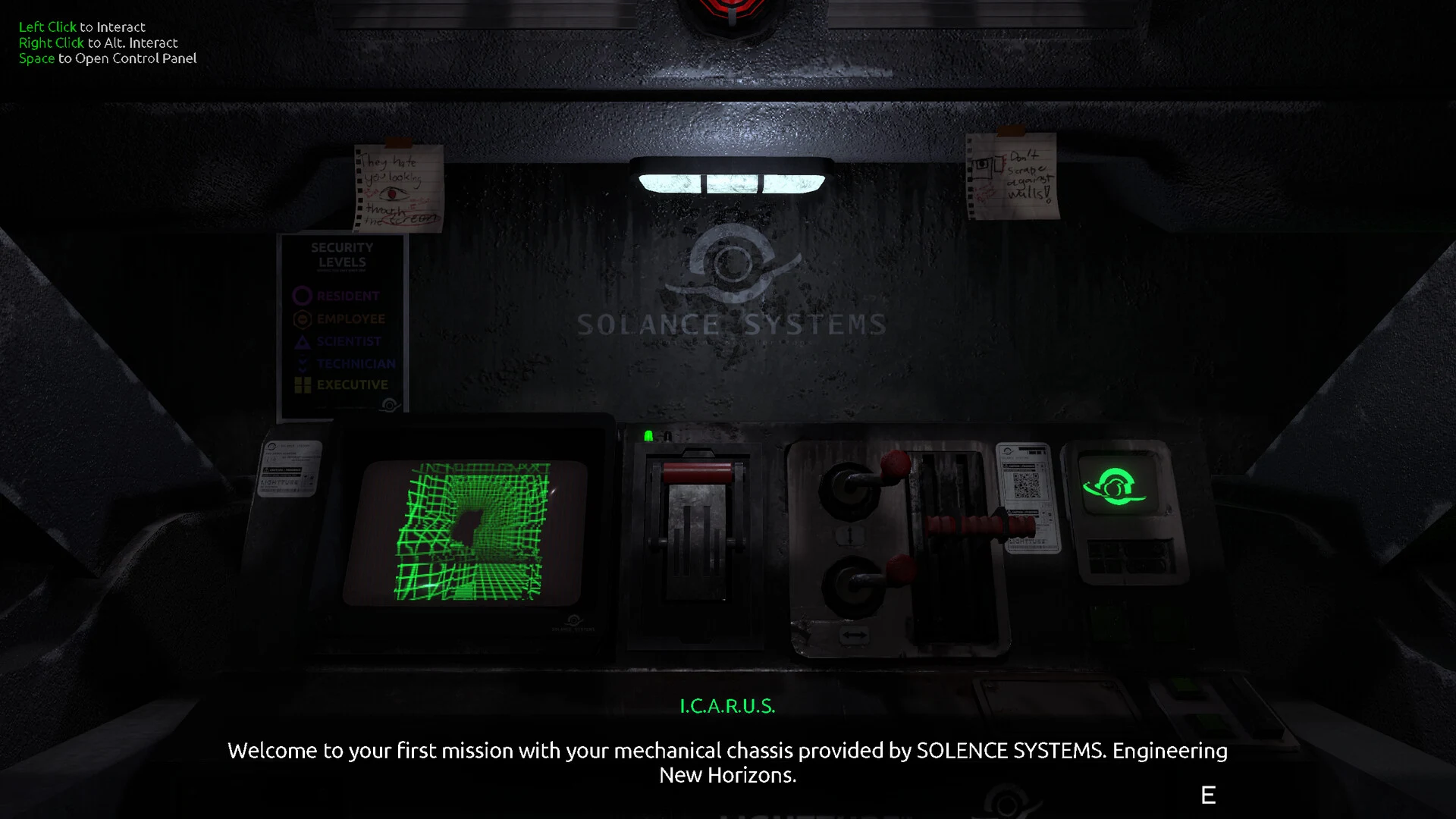
- FEED MY MECH beginner guide: Learn the cockpit, scanner, map, and interaction systems before exploring deeply.
- Core objective: Explore the underground colony, operate equipment, recover Signals, and confirm each progression change.
- Best habit: Plan every expedition around power reserves, a clear objective, and a known route back.
- Survival rule: Retreat when resources become critical instead of forcing an uncertain detour.
- Spoiler approach: Use the basic route first, then revisit optional discoveries, secrets, and ending-related interactions.
FEED MY MECH Beginner Guide: Core Systems
FEED MY MECH is a single-player mech horror exploration game built around limited visibility, environmental investigation, machine management, and careful movement through an abandoned underground colony. The safest way to begin is to understand how the cockpit supports every decision.
Your mech is more than transportation. Its interface provides the information needed to identify objectives, inspect equipment, navigate unfamiliar passages, and decide whether an expedition can continue. Before moving toward a distant area, take a moment to learn what each display communicates.
| System | Main purpose | Beginner habit |
|---|---|---|
| Cockpit display | Shows operational information and exploration feedback | Check it before leaving a safe position |
| Scanner | Examines nearby objects and points of interest | Scan with a clear search goal |
| Navigation interface | Supports orientation and route planning | Confirm your position after major interactions |
| Power readout | Helps measure expedition safety | Keep reserve power for the return route |
| Interaction prompt | Identifies usable equipment and objects | Reposition carefully if no prompt appears |
Read the Cockpit
Identify movement, interaction, scanning, navigation, and power information before entering an unfamiliar section.
Plan Short Expeditions
Choose one nearby objective, remember a landmark, and avoid exploring without a clear reason to continue.
Protect Your Return Route
Treat the trip back as part of the objective. Do not spend every available resource reaching the destination.
Spend your opening minutes learning the interface instead of rushing forward. Recognizing the difference between navigation information and interaction feedback prevents many early mistakes.
Step-by-Step Exploration Routine
A reliable exploration loop makes the game easier to read. Each expedition should begin with preparation, continue through focused investigation, and end with a confirmed route or a controlled retreat. Follow the sequence below whenever you leave a familiar position.
Choose one objective
Decide what you are trying to locate, inspect, activate, or recover. A focused objective keeps you from wasting time and power on unrelated passages.
Check the mech
Review the power readout, machine condition, and current cockpit information. If the planned route looks long or dangerous, leave a reserve for returning.
Mark your orientation
Note the safe position, a recognizable landmark, and the direction of the next route. This gives you a recovery point if the colony begins to look unfamiliar.
Scan relevant objects
Examine equipment, damaged machinery, unusual structures, and access points connected to the current objective. Avoid scanning every object without a reason.
Confirm progression
After using equipment or completing an interaction, check the nearby route and navigation information. Make sure the environment has changed before moving deeper.
| Exploration phase | What to check | Common mistake |
|---|---|---|
| Preparation | Power, machine condition, objective, return route | Leaving without enough reserve |
| Survey | Equipment, access points, landmarks, unusual objects | Repeating the same search |
| Interaction | Prompt range, surrounding clues, objective relationship | Assuming one activation completes everything |
| Confirmation | Route state, map information, new access | Moving on without verifying progress |
| Retreat | Safe direction, known landmark, remaining power | Searching for a shortcut while resources are low |
If you cannot explain why a passage matters, do not commit to a long detour immediately. Return to the last confirmed landmark, review the objective, and search again with a specific purpose.
Power Management and Survival Tips
Power management is one of the most important skills for new players. Exploration becomes risky when scanning, movement, equipment use, and time away from safe infrastructure leave too little capacity for the return trip.
Do not treat power as a resource that matters only when the display becomes critical. Instead, divide every expedition into three stages: the outward journey, the objective interaction, and the return journey. If the first stage consumes more than expected, shorten the search and reassess.
| Situation | Recommended response | Risk level |
|---|---|---|
| Entering a known route | Continue while checking landmarks | Low |
| Entering an unfamiliar branch | Confirm the objective and reserve power | Moderate |
| Searching several side passages | Stop and prioritize the most relevant path | Moderate |
| Operating equipment in a dangerous area | Keep an exit route visible | High |
| Low-power condition | Stop optional actions and retrace the route | High |
Before Exploration
Check power, machine status, route direction, and the nearest recognizable landmark.
During Exploration
Scan selectively, monitor your position, and keep the current objective visible in your decision-making.
Emergency Recovery
Stop optional interactions, avoid new branches, and follow the known route toward safety.
How to recover from a mistake
If you become disoriented, do not move randomly through the colony. Pause and identify the last location you can confirm. Use the navigation interface, compare visible terrain, and retrace the route before trying another branch.
If an interaction does not advance, move away from the object and approach again from a slightly different position. Check whether a previous objective or equipment action must be completed first. When the state still looks incorrect, reload the latest safe save rather than repeatedly forcing the same interaction.
The safest pattern is simple: prepare, investigate, confirm, and retreat when necessary. A controlled withdrawal preserves more progress than an unplanned deep expedition.
Signals, Secrets, and Optional Exploration
Signals and optional discoveries reward players who inspect the colony instead of following only the most direct route. However, exploration should remain structured. Search side passages after the main objective is understood, and revisit locations when a major progression change may have opened a new interaction.
Use spoiler-light exploration first. Look for unusual machinery, damaged structures, isolated objects, environmental clues, and spaces that appear visible but are not part of the obvious route. These locations may provide context, optional interactions, or information that helps explain the wider story.
| Discovery type | Where to look | How to approach it |
|---|---|---|
| Signals | Objective-related areas and optional exploration spaces | Search carefully after identifying the current task |
| Damaged machinery | Abandoned structures and isolated routes | Inspect objects that stand apart from nearby scenery |
| Environmental clues | Repeated symbols, messages, and unusual scenes | Compare details across different locations |
| Side passages | Dead ends, branches, and off-route terrain | Enter only with enough power to return |
| Revisited interactions | Previously checked areas after progression | Recheck locations when access conditions change |
Exploration Checklist:
- Check the current objective before leaving a safe position
- Scan relevant equipment and unusual objects
- Record a recognizable landmark for the return route
- Keep enough power for the trip back
- Revisit unresolved locations after major progression changes
Optional discoveries may also support achievement completion or improve your understanding of late-game events. If you want to reduce missed content, inspect side areas before committing to an irreversible final sequence. Keep a separate save when the game signals that a major decision is approaching.
Start with environmental clues and optional objects before opening ending explanations. This preserves the atmosphere while still giving you a practical way to track missed discoveries.
Progression, Achievements, and FAQ
The main story is designed around exploration and machine-based progression rather than a traditional combat build. Your strongest advantage is consistent information management: understand the objective, identify the relevant equipment, confirm the result, and preserve a safe route.
The game includes 12 Steam achievements, so a careful first playthrough can establish a strong foundation for later cleanup. Prioritize story progression naturally, then return for optional exploration, secrets, and ending-related requirements.
| Goal | Best time to pursue it | Useful approach |
|---|---|---|
| Main progression | First playthrough | Follow objectives and verify each route change |
| Optional discoveries | During or after the main route | Inspect side areas with sufficient power |
| Signals | When entering relevant exploration zones | Search objective areas and review nearby branches |
| Ending cleanup | After creating a backup save | Change one late decision at a time |
| Achievements | Across planned runs | Combine story progress with exploration checks |
Q: What should I learn first in FEED MY MECH?
Learn the cockpit display, interaction prompt, scanner, navigation interface, and power readout. These systems provide the information needed to explore safely and recognize progression.
Q: How should beginners manage power?
Plan enough power for the outward trip, the objective interaction, and the return route. Stop optional scanning and retreat when the remaining reserve becomes unsafe.
Q: What should I do if an interaction does not work?
Move away, reposition the mech, and approach the object again. If the prompt still fails, review the previous objective, reload the latest safe save, and repeat the intended sequence.
Q: Should I explore secrets during the first playthrough?
Yes, but use a focused approach. Inspect nearby side paths and clues when resources allow, then preserve a save before major late-game decisions so missed content can be revisited.
For official platform and store information, use the FEED MY MECH Steam page. For developer updates and related project information, check TheManiacMartian’s official page.
Do not measure progress only by distance traveled. In FEED MY MECH, a successful expedition means you learned something, completed a clear objective, or returned with enough resources to continue.