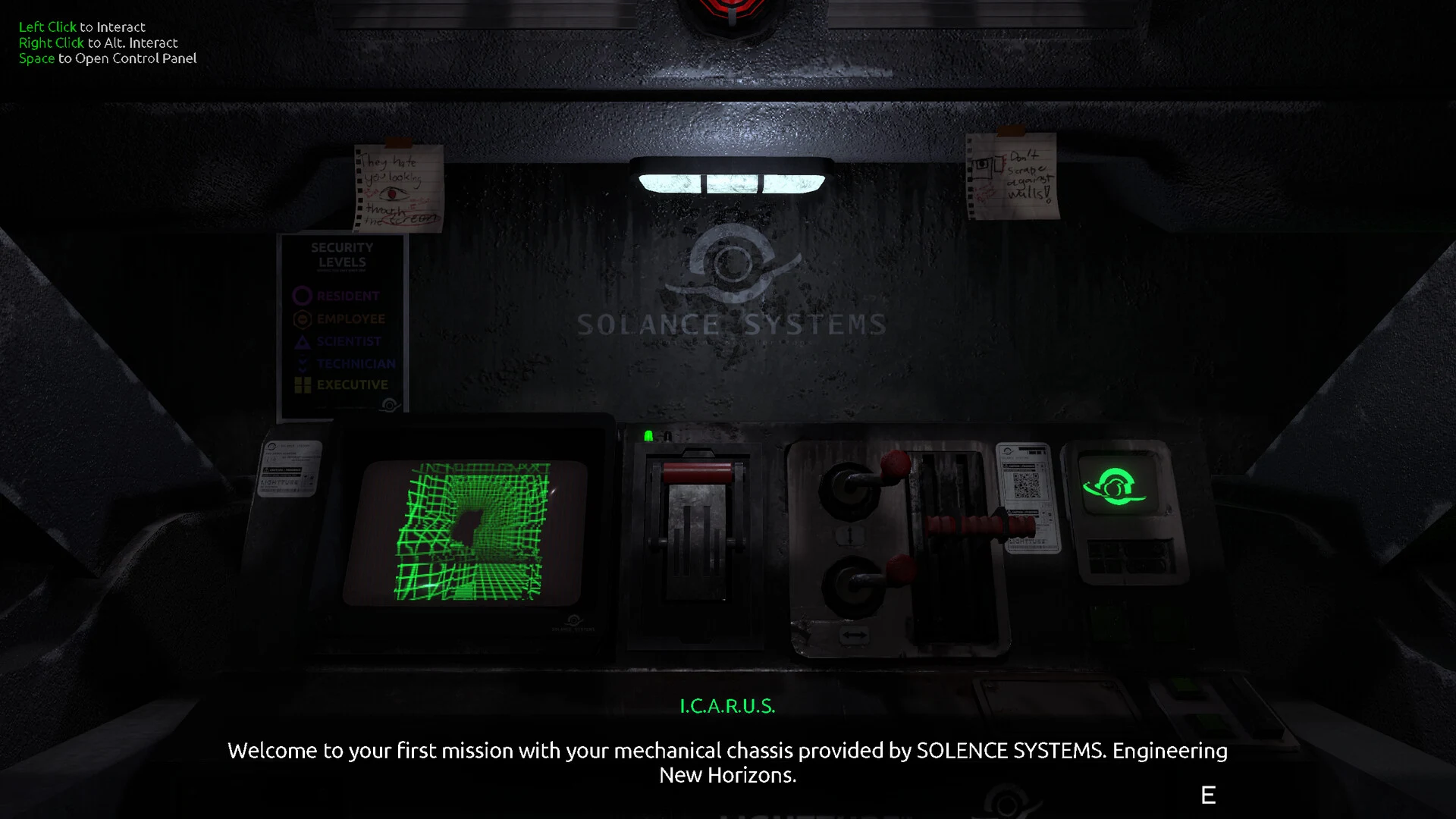
- FEED MY MECH lore centers on a trapped pilot, a dead underground colony, mysterious Signals, and failing machinery.
- Solance Systems provides an important story thread, but its full purpose should be separated from confirmed environmental clues.
- Signals and wreckage are valuable investigation points during both main objectives and optional exploration.
- Best approach: scan carefully, record repeated symbols, and revisit areas after major progression changes.
- Spoiler control: begin with environmental clues before opening ending-related or late-game interpretations.
FEED MY MECH Lore: The Core Mystery
FEED MY MECH lore is built around isolation, machine dependency, and the question of what happened to an underground colony. The player is trapped inside a mech cockpit and must explore abandoned spaces through restricted visibility, navigation systems, and mechanical readouts. Instead of presenting the story through constant exposition, the game encourages players to reconstruct events from Signals, damaged equipment, environmental details, and the behavior of infected machines.
The central mystery has several connected layers:
- Why was the underground colony abandoned?
- What are the recovered Signals, and why are they important?
- What role did Solance Systems play in the colony or the player’s mission?
- How did mechanical systems become infected or hostile?
- Which discoveries are essential to progression, and which exist primarily to deepen the setting?
The available story structure supports an investigative reading rather than a simple survival scenario. The mech is not only transportation. It is also the player’s viewpoint, life-support dependency, navigation system, and tool for examining a world that can no longer explain itself directly.
| Lore Element | What It Represents | How to Investigate |
|---|---|---|
| Underground colony | Isolation, failed infrastructure, and lost human activity | Compare routes, abandoned structures, and environmental changes |
| Signals | Mysterious mission-related information or recoverable story objects | Search objective areas and inspect optional locations |
| Solance Systems | Corporate or organizational background connected to the wider mystery | Track repeated references, equipment markings, and story clues |
| Infected machines | A direct threat and evidence that the colony’s systems changed | Observe behavior and note where hostile machinery appears |
| Mech cockpit | The player’s survival interface and limited perspective | Read power, navigation, scanner, and machine-state information |
Isolation
The underground setting limits visibility and separates the player from reliable outside assistance. Every recovered clue must be interpreted from inside the mech.
Infrastructure
Power systems, access points, elevators, equipment, and blocked routes connect the practical exploration loop to the story’s abandoned-colony theme.
Contamination
Infected machines turn familiar technology into a threat, suggesting that the colony’s failure is more complicated than simple abandonment.
Treat repeated environmental details as evidence rather than decoration. A single damaged machine may be atmosphere, but repeated symbols, messages, or system failures can form a larger narrative pattern.
The Underground Colony and Environmental Storytelling
The underground colony is the primary source of FEED MY MECH’s worldbuilding. Its spaces are designed to be explored from within a machine, so location design carries much of the narrative weight. Dead ends, unusual terrain gaps, damaged machinery, isolated objects, and side passages can all point toward optional context.
A useful way to read the colony is to separate each area into three layers:
- Functional layer: What does this location allow the player to do?
- Historical layer: What does the condition of the space suggest about previous activity?
- Threat layer: What has changed, and why is the area no longer safe?
This method prevents every object from being treated as a confirmed plot revelation. It also helps distinguish progression equipment from optional lore material.
| Exploration Layer | Questions to Ask | Typical Evidence |
|---|---|---|
| Functional | What route, device, or objective is connected to this area? | Access points, equipment, blocked paths, elevators |
| Historical | What happened here before the player arrived? | Wreckage, abandoned structures, unusual machinery |
| Threat | Why is this space dangerous now? | Infected machines, hazardous routes, machine damage |
| Narrative | Does this location connect to a wider mystery? | Repeated symbols, messages, Signals, corporate clues |
Follow these habits while exploring:
- Scan prominent objects when entering a new section.
- Inspect damaged equipment instead of moving past it immediately.
- Check side passages after the main objective marker changes.
- Remember landmarks that can help you return safely.
- Revisit accessible areas after operating major equipment.
- Compare environmental details instead of interpreting them in isolation.
Establish the Area’s Function
Identify whether the location is primarily a route, equipment room, access point, objective site, or optional side area. This gives each environmental clue a practical context.
Scan and Inspect
Use the scanner and interaction prompts on unusual machinery, isolated objects, wreckage, and readable surfaces. Move the mech into a better position if an interaction does not appear.
Record Repeated Details
Pay attention to symbols, messages, visual motifs, or machine conditions that appear in more than one section. Repetition is more useful than a single ambiguous object.
Return After Progression
Recheck nearby routes after activating equipment or completing a major objective. A previously irrelevant space may become meaningful after the colony’s state changes.
Not every damaged object confirms a specific event. Separate direct observations from theories, especially when connecting environmental details to Solance Systems or the infected machines.
Signals, Solance Systems, and Key Clues
Signals are among the most important lore-related elements because they connect exploration, objectives, and the wider mystery. They should be treated as more than ordinary collectibles. Their locations, surrounding equipment, and relationship to the current mission can help explain what the player is doing inside the colony.
Solance Systems is another major thread for story-focused exploration. The available game information identifies it as part of the background surrounding the mission and the colony, but a careful guide should avoid presenting every theory as established fact. Use corporate references as a framework for investigation rather than a shortcut to a definitive explanation.
| Clue Type | Investigation Priority | Recommended Method | Story Value |
|---|---|---|---|
| Signals | High | Search objective areas and inspect nearby context | Connects exploration to the wider mystery |
| Solance Systems references | High | Compare repeated markings, messages, or equipment details | Builds organizational background |
| Damaged machinery | Medium | Inspect condition, placement, and nearby routes | Shows infrastructure failure or disruption |
| Environmental messages | Medium | Read every available clue before leaving | Adds context to the colony |
| Optional wreckage | Medium | Search isolated locations and dead ends | May reveal nonessential story details |
A strong Signal investigation routine looks like this:
- Identify the current objective before leaving a safe position.
- Search the direct route first so progression remains clear.
- Check nearby side paths once the main interaction is complete.
- Inspect the environment around the Signal rather than collecting it and immediately leaving.
- Compare the Signal’s location with nearby machinery, access points, or unusual terrain.
- Note whether the discovery changes the route, objective, or available interpretation.
Signals
Focus on location, surrounding objects, and whether the Signal appears connected to a current objective or optional discovery.
Corporate Clues
Track Solance Systems references across equipment, messages, and environmental details without assuming every reference has the same meaning.
Machine Evidence
Compare ordinary machinery with infected threats to understand how the colony’s technology has changed.
Use a three-part note for every major clue: what you directly observed, what it may suggest, and what remains unconfirmed. This keeps lore theories useful without turning speculation into canon.
Infected Machines and the Mech’s Limited Perspective
The infected machines are important to the lore because they transform the colony’s infrastructure into an active threat. The Spider and Infected Mech are identified as dangers connected to the game’s exploration loop, but their exact origin should be approached through observation rather than unsupported assumptions.
Their presence creates a contrast between the player’s mech and the surrounding machines. The player depends on mechanical systems for movement, scanning, navigation, and survival, while hostile machines demonstrate how technology can become unreliable or dangerous. This contrast supports the game’s broader themes of dependence and loss of control.
| Threat | Lore Function | Survival Priority | Investigation Focus |
|---|---|---|---|
| Spider | Represents an immediate, mobile mechanical danger | Maintain an escape route and avoid unnecessary exposure | Note where it appears and what kind of area surrounds it |
| Infected Mech | Reflects the danger of corrupted or altered machinery | Check resources before entering hazardous sections | Compare its behavior with the player’s mech systems |
| Environmental hazard | Makes the colony itself feel unstable | Use navigation and conserve power | Look for equipment or structural clues nearby |
| Low-power situation | Turns exploration tools into liabilities | Retreat toward a confirmed safe position | Consider how infrastructure supports or fails the player |
When danger appears, prioritize survival over lore collection:
- Enter hazardous areas only with a clear objective.
- Keep enough power for the return trip.
- Do not continue optional scanning when resources are critical.
- Use known landmarks to avoid becoming disoriented.
- Retreat if the machine state becomes unsafe.
- Revisit the location later when the objective and route are clearer.
Lore Exploration Checklist:
- Scan unusual objects when entering a new colony section
- Inspect wreckage, damaged machinery, and readable surfaces
- Record repeated symbols or messages
- Check side passages after major progression changes
- Preserve enough power for a safe return
A missed optional clue is usually easier to recover than a failed expedition. Secure the route first, then return for lore when the mech has enough power and orientation.
How to Read the Ending and Unresolved Mysteries
The ending should be approached as the final layer of the investigation, not the first place to search for answers. Before entering the last sequence, inspect optional areas, resolve available equipment interactions, and preserve a save. This makes it easier to compare outcomes without repeating the entire exploration route.
A spoiler-light approach is especially useful because the game’s story depends on discovery. Read the colony’s condition first, then connect Signals, corporate references, and machine threats. If a late-game choice changes the outcome, compare it against the evidence gathered during exploration rather than judging it as an isolated decision.
| Story Question | Evidence to Review | Best Approach |
|---|---|---|
| What happened to the colony? | Abandoned structures, damaged systems, environmental messages | Compare multiple locations before forming a conclusion |
| What are the Signals for? | Signal locations, nearby equipment, objective context | Examine their practical and narrative relationship |
| What is Solance Systems’ role? | Corporate references, machinery, mission details | Separate confirmed references from interpretation |
| Why are machines infected? | Hostile machine behavior, damaged infrastructure, hazardous areas | Look for repeated conditions rather than one encounter |
| What changes between outcomes? | Final choices, optional clues, late-game interactions | Preserve a save and test one variable at a time |
Use this endgame process:
- Finish optional investigations that are available before the final sequence.
- Create a separate save before an irreversible choice.
- Record the decision and immediate result.
- Compare the outcome with the environmental evidence already collected.
- Reload the prepared save to examine another route if needed.
- Revisit earlier areas after completion to search for missed context.
The most useful lore discoveries may also explain late-game events. If you want to preserve the mystery, begin with the environmental sections and delay ending comparisons until after your first completion.
Q: What is the main focus of FEED MY MECH lore?
The lore focuses on a trapped pilot exploring a dead underground colony, recovering mysterious Signals, surviving infected machines, and investigating the role of Solance Systems.
Q: Are Signals only progression items?
Signals are tied to exploration and objectives, but their surrounding locations and environmental context can also support the broader story investigation.
Q: What is the best way to understand Solance Systems?
Track repeated references across equipment, messages, and environmental clues. Separate direct observations from theories instead of treating every corporate detail as confirmed.
Q: Should I explore every side path before the ending?
Yes, when resources allow. Inspect optional areas, preserve a save before the final sequence, and revisit unresolved locations after major progression changes.
For the broader game structure, use the official FEED MY MECH Steam page for the current release information, then pair it with the wiki’s walkthrough, Signals, Secrets, Enemies, and Endings guides.