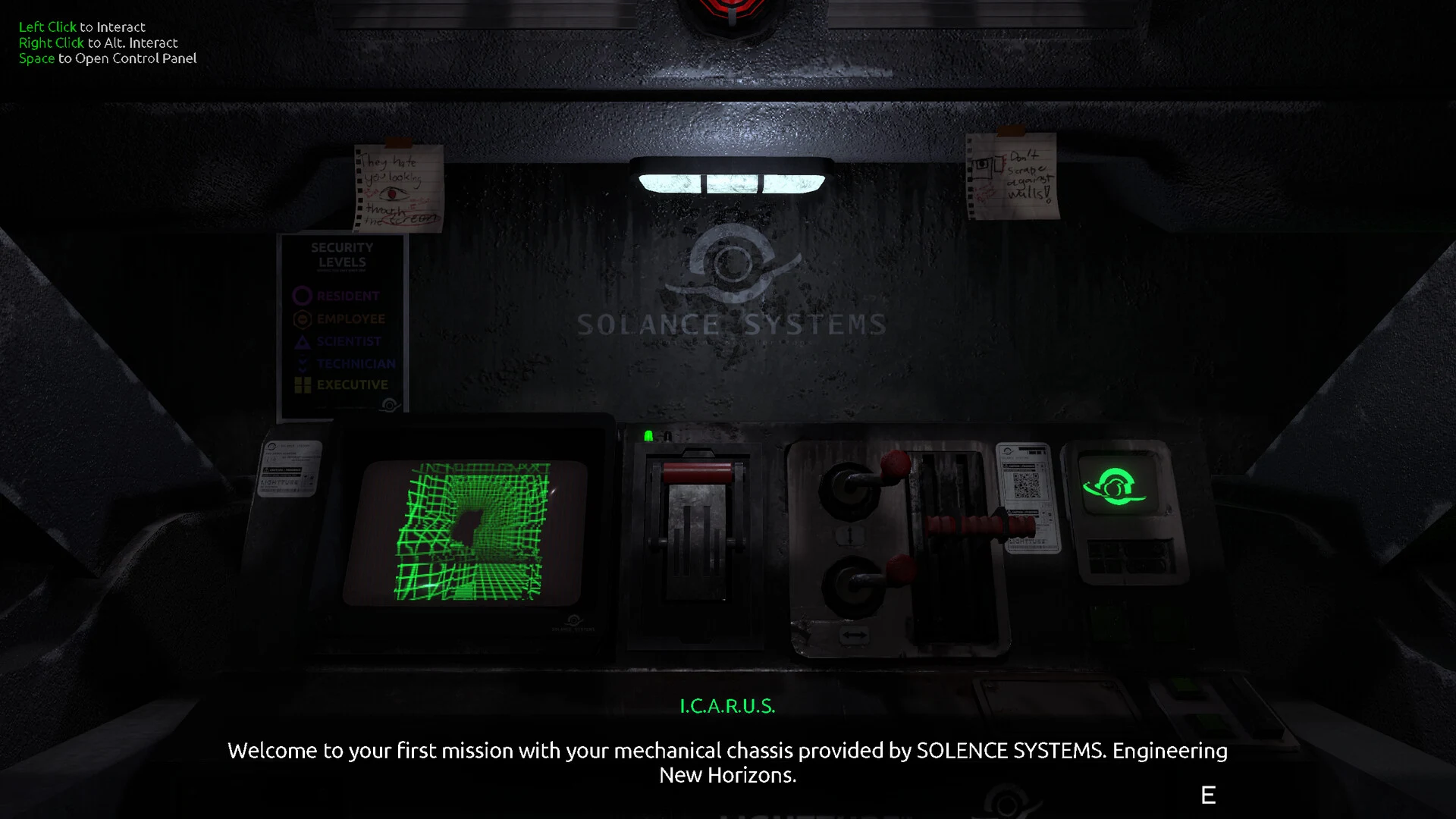
- FEED MY MECH tv tropes centers on isolation, industrial horror, and exploration under pressure.
- The cockpit viewpoint turns limited visibility and machine readouts into major storytelling tools.
- The underground colony supports themes of abandonment, buried history, and unreliable infrastructure.
- Infected machines connect body horror with technological decay and survival tension.
- Signals and Solance Systems provide the main mystery framework without requiring a traditional combat focus.
FEED MY MECH tv tropes: Core Horror Themes
FEED MY MECH is a single-player mech horror exploration game built around a trapped pilot, a restricted cockpit view, and a dead underground colony. Its strongest tropes come from the tension between advanced machinery and an environment that no longer feels controlled.
The game’s horror is not presented as a straightforward power fantasy. The mech provides movement, scanning, navigation, and protection, but it also creates distance between the player and the outside world. Every screen, indicator, and mechanical response becomes part of the atmosphere.
Treat the cockpit as more than an interface. Its limited information, warning displays, and navigation tools shape how the player understands danger and uncertainty.
Claustrophobic Cockpit
- Limited viewpoint
- Heavy industrial framing
- Dependence on screens and readouts
- Isolation from the outside environment
Abandoned Colony
- Empty infrastructure
- Broken routes and equipment
- Environmental storytelling
- A sense of buried history
Mechanical Infection
- Threats that mirror the player’s machine
- Technological decay
- Unclear boundaries between machine and organism
- Survival through avoidance
The cockpit creates a classic limited-perspective horror structure. The player cannot freely inspect the world as a human character might. Instead, they rely on instruments, maps, scanner feedback, and visual fragments. That restriction makes ordinary exploration feel unsafe.
The underground colony reinforces the same idea. A colony is normally associated with shelter, organization, and human progress. In FEED MY MECH, the abandoned setting reverses those expectations. Corridors, elevators, machinery, and access points become reminders that a once-functional system has failed.
| Theme | How It Appears | Player Effect |
|---|---|---|
| Isolation | A pilot remains inside a mech while exploring alone | Makes routine travel feel vulnerable |
| Industrial decay | Damaged machinery, blocked routes, and abandoned infrastructure | Encourages inspection and caution |
| Limited information | Cockpit displays, scanning, and navigation tools | Turns uncertainty into tension |
| Infected technology | Hostile mechanical threats | Makes the mech feel less secure |
| Buried history | Signals, clues, and Solance Systems references | Rewards careful exploration |
The result is a form of atmospheric horror where tension comes from anticipation. A route may be quiet, but the player still has to consider power, orientation, machine condition, and the possibility of an infected threat.
Exploration Tropes: The Underground Colony and the Mech
Exploration in FEED MY MECH combines environmental investigation with resource awareness. The game asks players to move through an underground colony, locate important equipment, recover Signals, and identify which interactions advance the current objective.
The most useful way to understand this structure is as a loop: prepare the mech, search the area, operate the relevant equipment, confirm that the environment has changed, and continue only when the return route remains safe.
Do not treat every visible route as a safe next step. Check power, machine condition, navigation references, and the intended objective before entering an unfamiliar section.
Read the Cockpit
Identify movement, interaction, scanner, navigation, and power information before traveling deeper into the colony. The cockpit is the main source of operational feedback.
Choose One Objective
Select a nearby goal such as locating equipment, checking an access point, or investigating a possible Signal. A focused objective reduces wasted movement and repeated searches.
Search With the Scanner
Inspect machinery, unusual objects, damaged structures, and environmental details that may relate to progression. Use the scanner to support a clear search rather than scanning without a plan.
Confirm the Route Changed
After operating equipment, revisit nearby access points and check the navigation interface. A successful interaction may change a route without immediately completing the whole objective.
Advance With a Return Plan
Enter the next area only after confirming that the mech has enough operational reserve and that a recognizable route back remains available.
This exploration loop supports several recognizable horror and science-fiction motifs. The player is not simply walking through a level; they are maintaining a fragile expedition. Every detour has a cost, and every unexplained device may be connected to a wider system.
| Exploration Element | Practical Role | Thematic Role |
|---|---|---|
| Scanner | Finds relevant objects and clues | Suggests that the environment hides information |
| Navigation display | Maintains orientation | Shows dependence on imperfect technology |
| Power management | Limits exploration time | Makes the mech feel vulnerable |
| Equipment interactions | Changes access or progression | Reveals how the colony once functioned |
| Signals | Connects exploration to mystery | Creates a trail through an otherwise empty world |
The elevator and final-area concepts also fit the game’s broader design language. An elevator is both a practical route and a strong horror device: it separates spaces, delays progress, and can make the player feel trapped between safe and dangerous areas. The final region similarly represents a deeper layer of the colony’s secrets rather than just another destination.
Use recognizable landmarks and confirmed access points as anchors. When disoriented, return to the last known position instead of choosing a random branch.
Enemy Tropes: Infected Machines and Survival Tension
The enemy design described for FEED MY MECH emphasizes infected mechanical threats, including Spider-type enemies and an Infected Mech. These threats are important because they reflect the player’s own situation: the machine is a vehicle, shelter, and survival tool, but machines in the colony can also become hostile.
This creates a strong “technology turned against its purpose” motif. Equipment should make exploration safer, yet the presence of infected machines means the industrial environment cannot be trusted. The player’s goal is therefore to recognize danger early, preserve resources, and retreat when conditions become unfavorable.
The safest survival strategy is built around awareness and positioning. Enter dangerous areas with a clear objective, keep an exit route in mind, and avoid unnecessary exploration when power or machine condition becomes critical.
| Threat Type | Main Narrative Function | Recommended Response |
|---|---|---|
| Spider | Adds movement-based danger to exploration | Stay alert, avoid unnecessary exposure, and keep retreat space |
| Infected Mech | Mirrors the player’s own machine | Treat the encounter as a high-risk mechanical threat |
| Hazardous area | Converts navigation into survival pressure | Enter only with sufficient power and a clear objective |
| Unclear route | Increases the chance of resource loss | Return to a known landmark and rebuild the route |
The Infected Mech is especially effective as a horror concept because it removes the assumption that machinery is neutral. The player is operating a mech, depending on its systems, and interpreting the world through its instruments. Seeing a hostile machine turns that relationship into a warning: the same technological environment that supports survival can also become contaminated.
The Spider threat supports a different kind of tension. A recognizable enemy silhouette can make quiet exploration feel temporary. Players may begin scanning not only for objectives but also for signs that an apparently empty area is unsafe.
A cautious survival routine works best:
- Check power before entering a hazardous section.
- Keep the navigation interface available when possible.
- Avoid spending resources on repeated searches.
- Maintain enough reserve for the return trip.
- Leave when the machine’s condition or power becomes critical.
- Reload the latest safe save if an interaction becomes blocked.
This approach matches the game’s exploration identity. The player is not encouraged to solve every problem through direct confrontation. Survival depends more on preparation, interpretation, and controlled movement.
Signals, Secrets, and Solance Systems Mysteries
Signals form one of FEED MY MECH’s central mystery structures. They give exploration a purpose beyond simply reaching the next area and connect isolated locations to a larger story about the underground colony and Solance Systems.
The game’s secret content is best understood in layers. Some discoveries are low-spoiler environmental details, while others may reveal information about the world, the mech’s journey, or late-game outcomes. This structure encourages players to revisit locations and inspect objects that appear unimportant during the first pass.
Inspect unusual machinery, isolated structures, dead ends, and environmental details before leaving an area. Optional clues may be easier to understand after a major progression event changes the surrounding context.
| Discovery Type | Where to Look | Possible Value |
|---|---|---|
| Off-route areas | Side passages, dead ends, and terrain gaps | Optional context or resources |
| Wreckage | Damaged machinery and isolated structures | Environmental clues |
| Repeated symbols | Locations connected by similar visual details | Story connections |
| Signals | Exploration areas tied to objectives | Progression and mystery |
| Solance Systems references | Equipment, messages, and colony infrastructure | Background about the wider world |
The Solance Systems material gives the setting a corporate and technological dimension. Rather than presenting the colony as an isolated ruin with no explanation, the game points toward an organization and a system behind the environment. That creates familiar science-fiction motifs: corporate responsibility, abandoned infrastructure, hidden projects, and information buried beneath official objectives.
The strongest investigation method is to separate observation from interpretation:
- Record what the environment visibly shows.
- Identify repeated objects, symbols, or messages.
- Compare those details with the current objective.
- Revisit earlier areas after major progression changes.
- Keep ending-related conclusions separate from confirmed discoveries.
Exploration Evidence Checklist:
- Inspect unusual machinery and damaged structures
- Check side paths and dead ends before leaving an area
- Use the scanner on objects connected to the current objective
- Revisit earlier locations after major progression changes
- Record discoveries that may relate to Signals or Solance Systems
This method avoids overreading individual clues while still rewarding curiosity. FEED MY MECH works best when the player notices relationships between systems, locations, and repeated environmental details.
Endings, Achievements, and the Best Trope-Focused Route
The ending structure should be approached with spoiler control. Complete the main exploration objectives first, inspect optional interactions, and preserve a save before any irreversible late-game sequence. This allows players to compare outcomes without repeating the entire underground colony route.
The achievement structure also supports multiple play styles. Story progression objectives are generally easier to combine with exploration goals when optional areas are checked before the final sequence.
Create a separate manual save before the final progression step. Keep it untouched while testing alternate choices, ending routes, or late-game interactions.
| Goal Type | Best Timing | Missable Risk | Recommended Method |
|---|---|---|---|
| Story progression | During the main route | Lower | Follow required objectives and equipment interactions |
| Exploration | Before final progression | Higher | Check side paths, objects, and unusual locations |
| Ending-related goals | Near the finale | Higher | Preserve a save and change one decision at a time |
| Achievement cleanup | After first completion | Varies | Revisit unresolved areas with better context |
A strong first playthrough route is:
- Learn the cockpit and interface.
- Follow the main objective chain without rushing.
- Investigate optional areas when power allows.
- Recover and examine Signals.
- Note unresolved machinery or blocked routes.
- Create a backup save before the final sequence.
- Complete the ending, then return for cleanup.
Q: Is FEED MY MECH tv tropes an official TV Tropes page?
The available material supports a trope-focused analysis of FEED MY MECH, but it does not confirm an official TV Tropes page. This article uses the keyword to describe the game's horror themes, motifs, and narrative patterns.
Q: What are the main horror tropes in FEED MY MECH?
The strongest themes are isolation, industrial decay, limited visibility, abandoned infrastructure, infected technology, and the fear of relying on machines that may no longer be safe.
Q: Why is the cockpit important to the game's atmosphere?
The cockpit limits the player's viewpoint and makes screens, scanning, navigation, and power information essential. This turns ordinary interface feedback into part of the horror experience.
Q: How should players prepare for endings and achievements?
Complete optional exploration before the final sequence, preserve a separate save, and test alternate choices one at a time. This approach supports ending comparisons and reduces repeated playthrough time.
For official game information, use the FEED MY MECH Steam store page and the TheManiacMartian itch.io page. These links are the best places to check current platform, language, and release information in 2026.