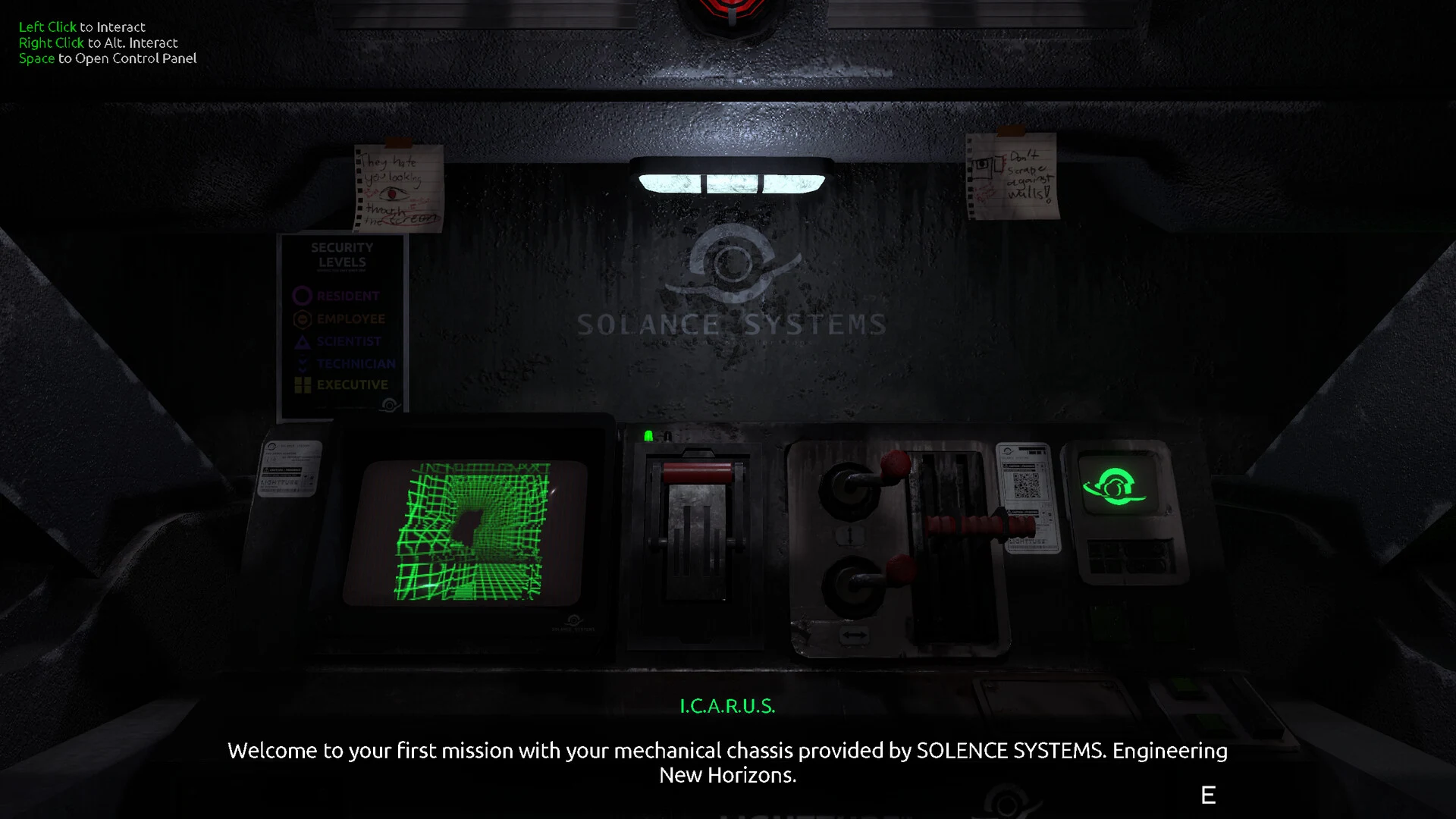
- FEED MY MECH horror review: A focused look at atmosphere, exploration, survival systems, and pacing.
- Best feature: The cockpit perspective creates tension through limited information and controlled visibility.
- Core loop: Explore the underground colony, manage power, operate equipment, and recover mysterious Signals.
- Main weakness: The short two-to-three-hour runtime may feel brief for players expecting a large campaign.
- Best for: Horror fans who prefer environmental discovery, machine management, and restrained storytelling.
FEED MY MECH Horror Review: The Core Experience
FEED MY MECH horror review coverage is best understood through its atmosphere rather than traditional combat or progression systems. Developed by TheManiacMartian, this single-player horror exploration game places you inside a mech cockpit in a deserted underground colony. The limited viewpoint, machine-focused interface, and uncertain surroundings create a tense experience built around observation, planning, and survival.
The game does not present itself as a long-form action adventure. Its reported main story length of approximately two to three hours supports a compact structure where each area, machine interaction, and environmental clue has a clear role. Instead of filling the map with repeated objectives, FEED MY MECH concentrates on the feeling of entering a hostile place with incomplete information.
| Review Category | Assessment | Why It Matters |
|---|---|---|
| Atmosphere | Strong | Industrial interiors, darkness, and restricted visibility support the horror tone. |
| Exploration | Focused | The underground colony encourages deliberate route planning and inspection. |
| Survival systems | Meaningful | Power and machine condition influence how far you can safely travel. |
| Storytelling | Environmental | Clues, Signals, equipment, and locations build context without constant exposition. |
| Runtime | Compact | The main journey is estimated at roughly 2–3 hours. |
The cockpit is the game’s defining perspective. You are not freely walking through every room as a conventional horror protagonist. Instead, the mech acts as both transportation and protection, while also becoming a source of anxiety. Its displays, navigation tools, scanner, and power readings are essential, but they do not eliminate uncertainty.
That design gives every expedition a practical question: how far can you safely go before returning? A route may appear manageable until power drops, navigation becomes unclear, or an infected machine changes the meaning of a previously safe passage.
Atmospheric Horror
- Industrial isolation
- Restricted visibility
- Uneasy environmental details
- Tension without constant combat
Exploration Focus
- Underground colony routes
- Equipment-based progression
- Optional clues and side paths
- Signals to recover and investigate
Compact Structure
- Short main story
- Limited repetition
- Clear objective chain
- Suitable for focused sessions
Treat FEED MY MECH as a compact atmospheric horror adventure, not a large open-ended mech game. Its strongest moments come from uncertainty, careful movement, and environmental discovery.
Exploration, Navigation, and the Underground Colony
Exploration is organized around a simple but effective routine: identify a goal, prepare the mech, search the current area, operate relevant equipment, and confirm that progression has occurred. This structure keeps the game readable while still allowing uncertainty inside each location.
The underground colony works best when you approach it as a connected set of problems rather than a collection of combat arenas. A blocked route may require an equipment interaction. A machine may need to be examined before it becomes useful. A newly opened path may lead to a more dangerous section where the return trip matters as much as the destination.
| Exploration Phase | Recommended Action | Common Mistake |
|---|---|---|
| Preparation | Check power, machine state, and intended destination. | Leaving without enough reserve for the return trip. |
| Survey | Scan important equipment and inspect nearby access points. | Repeating searches without tracking what was checked. |
| Interaction | Operate devices connected to the current obstruction or objective. | Activating equipment without checking the surrounding area. |
| Confirmation | Recheck the map, route, and previously blocked passage. | Assuming one interaction automatically completes the objective. |
| Advancement | Enter the next area only after confirming orientation and resources. | Pushing deeper after losing the route back. |
The navigation interface is especially important for players who become disoriented in dark or industrial environments. Before entering a branching section, identify a landmark, access point, or recognizable route. If the path becomes unclear, return to the last confirmed position instead of searching randomly.
The scanner should support exploration rather than replace it. Use it when entering a new area, after a major objective changes, and when an unusual object appears connected to the story or machinery. Excessive scanning can make the search feel repetitive, while purposeful scanning turns it into a useful investigation tool.
Set One Clear Objective
Decide whether you are searching for a Signal, inspecting equipment, opening a route, or reaching the next colony section. A narrow objective reduces wasted movement and makes the environment easier to read.
Check the Return Route
Before moving away from a safe position, identify a landmark and confirm that your power reserve supports both the outward trip and the return. This is especially important before entering hazardous areas.
Scan Relevant Objects
Prioritize machinery, access points, unusual wreckage, and objects that appear connected to the current objective. Record mentally which locations have already been checked.
Operate and Recheck
After interacting with equipment, review the nearby route and navigation display. Confirm that a passage, objective, or environmental state has changed before moving onward.
Advance Conservatively
Enter the next section only when the mech is ready, the route is understood, and the objective is clear. Retreating to a known position is often better than forcing uncertain progress.
Do not treat a newly opened route as a one-way commitment. Check power and orientation before entering, because the safest solution may require returning through the same area.
Power Management and Survival Pressure
Power management gives FEED MY MECH much of its practical tension. The mech is not simply a vehicle that carries you through the setting; it is the system that determines how long your expedition can remain viable. Movement, scanning, equipment use, and time spent away from safe infrastructure all matter when resources are limited.
A strong approach is to divide every trip into three stages: preparation, active exploration, and emergency recovery. This prevents the most common mistake—continuing deeper after the return route has already become unsafe.
| Survival Stage | Priority | Useful Habit |
|---|---|---|
| Before exploration | Confirm power and machine condition. | Reserve enough capacity for the return trip. |
| During exploration | Use scanning and movement with purpose. | Avoid unnecessary detours and repeated inspections. |
| In hazardous areas | Maintain an exit plan. | Enter only with a specific objective. |
| Low-power state | Stop optional activity. | Retrace the known route toward safety. |
| Disorientation | Rebuild your route from a landmark. | Avoid random movement through unfamiliar space. |
The survival design is effective because it makes ordinary actions feel consequential. A scanner is useful, but scanning without a purpose can waste resources. A side path may contain a clue, but exploring it at the wrong time can leave you without enough capacity to return. The result is a form of horror based on commitment: every detour asks whether the information gained is worth the operational cost.
Before Leaving
- Check power
- Review machine condition
- Select one objective
- Identify the return route
While Exploring
- Scan with purpose
- Track landmarks
- Monitor hazards
- Avoid unnecessary detours
When Resources Drop
- Stop optional searches
- Leave dangerous areas
- Follow known routes
- Save in a separate slot when possible
The game’s infected mechanical threats reinforce this cautious rhythm. The Spider and Infected Mech concepts described for the game are most effective when treated as threats to avoid and understand rather than opponents to overpower through constant aggression. Check the route, maintain distance where possible, and avoid entering an encounter without a clear escape option.
A successful expedition is not the one that reaches the farthest point. It is the one that completes its objective and returns with enough operational capacity to continue.
Secrets, Signals, and Storytelling
Signals, hidden areas, wreckage, and environmental clues provide the game’s optional layer. They are worth investigating because the main route is only part of the experience. Side passages and unusual objects can expand the setting, clarify the colony’s history, and add context to the wider mystery involving Solance Systems.
The best way to search for secrets is to revisit locations after major progression changes. A previously irrelevant passage may become meaningful once equipment has been activated or a route has opened. Do not assume that every discovery changes the ending, but do pay attention to repeated symbols, messages, machinery, and scenes that seem inconsistent with the immediate objective.
| Discovery Type | Where to Look | Likely Value | Missable Risk |
|---|---|---|---|
| Signals | Optional routes and objective-related areas | Progression clues and story context | Medium |
| Wreckage | Abandoned structures and isolated machinery | Environmental storytelling | High |
| Side passages | Areas outside the direct route | Optional discoveries and resources | High |
| Repeated symbols | Locations connected by visual motifs | Narrative interpretation | Medium |
| Unusual equipment | Devices near blocked or dangerous routes | Progression clues | Medium |
Use a spoiler-light method on your first run:
- Inspect unusual objects before leaving an area.
- Check dead ends instead of assuming they are empty.
- Revisit locations after operating important equipment.
- Keep a mental note of unresolved interactions.
- Preserve a save before the final sequence if you plan to compare outcomes.
The short runtime makes a second pass practical. After completing the main route, you can return with a better understanding of how progression works and search more deliberately for optional context. This is also the safest way to investigate possible ending differences without repeating every early section.
Exploration Review Checklist:
- Inspect side paths before leaving each colony section
- Scan unusual machinery and abandoned wreckage
- Track unresolved interactions after major objectives
- Revisit earlier areas after routes change
- Create a backup save before the final sequence
For a first playthrough, focus on route discovery and optional inspection. Use an endings guide only after you have decided whether you want direct information about late-game choices.
Final Verdict and Who Should Play
FEED MY MECH succeeds when it keeps its scope controlled. The game combines a deserted underground colony, a vulnerable machine interface, resource-conscious exploration, and hostile mechanical threats into a compact horror experience. Its identity comes from the relationship between the cockpit and the environment: the mech helps you survive, but its systems also remind you how limited your options are.
| Player Type | Recommendation | Reason |
|---|---|---|
| Atmospheric horror fan | Strong fit | The setting and restricted viewpoint create sustained unease. |
| Exploration-focused player | Strong fit | Progress depends on searching, inspecting, and understanding routes. |
| Long-campaign fan | Mixed fit | The estimated 2–3 hour story may feel brief. |
| Action combat fan | Mixed fit | The experience emphasizes avoidance, systems, and discovery over fighting. |
| Completionist | Good fit | Signals, secrets, achievements, and alternate discoveries support cleanup runs. |
The strongest reasons to play are:
- You enjoy horror built around isolation and limited information.
- You prefer environmental storytelling over constant dialogue.
- You like planning routes and managing resources.
- You want a focused experience that can be completed in a few sessions.
- You appreciate machinery, abandoned facilities, and industrial science-fiction settings.
The main caveat is expectation management. FEED MY MECH is not presented as a broad mech simulator, a large survival sandbox, or a combat-heavy action title. The mech is primarily a viewpoint, transport system, and survival tool. Players who want deep customization or lengthy progression may find the experience restrained.
For official platform and release information, check the FEED MY MECH Steam page. The game is listed as a Windows PC single-player horror exploration title, with a release date of November 28, 2025.
Q: Is FEED MY MECH a combat-focused mech game?
No. FEED MY MECH is primarily a horror exploration experience. The mech supports movement, scanning, navigation, equipment use, and survival, while threats are generally approached through caution and route management.
Q: How long does FEED MY MECH take to complete?
The main story is estimated at approximately two to three hours. Optional Signals, secrets, environmental clues, and achievement cleanup can extend the overall experience.
Q: What makes the horror effective?
The cockpit perspective, restricted visibility, uncertain routes, power management, and infected mechanical threats create pressure without requiring constant combat or jump scares.
Q: Should I search for secrets during my first playthrough?
Yes, but keep the search focused. Inspect unusual objects and side paths when resources are safe, then revisit missed areas after completing the main route or reaching a new progression state.
FEED MY MECH is most compelling as a short, atmospheric exploration horror game. Expect careful navigation, machine management, environmental clues, and tension built through uncertainty rather than extended combat.