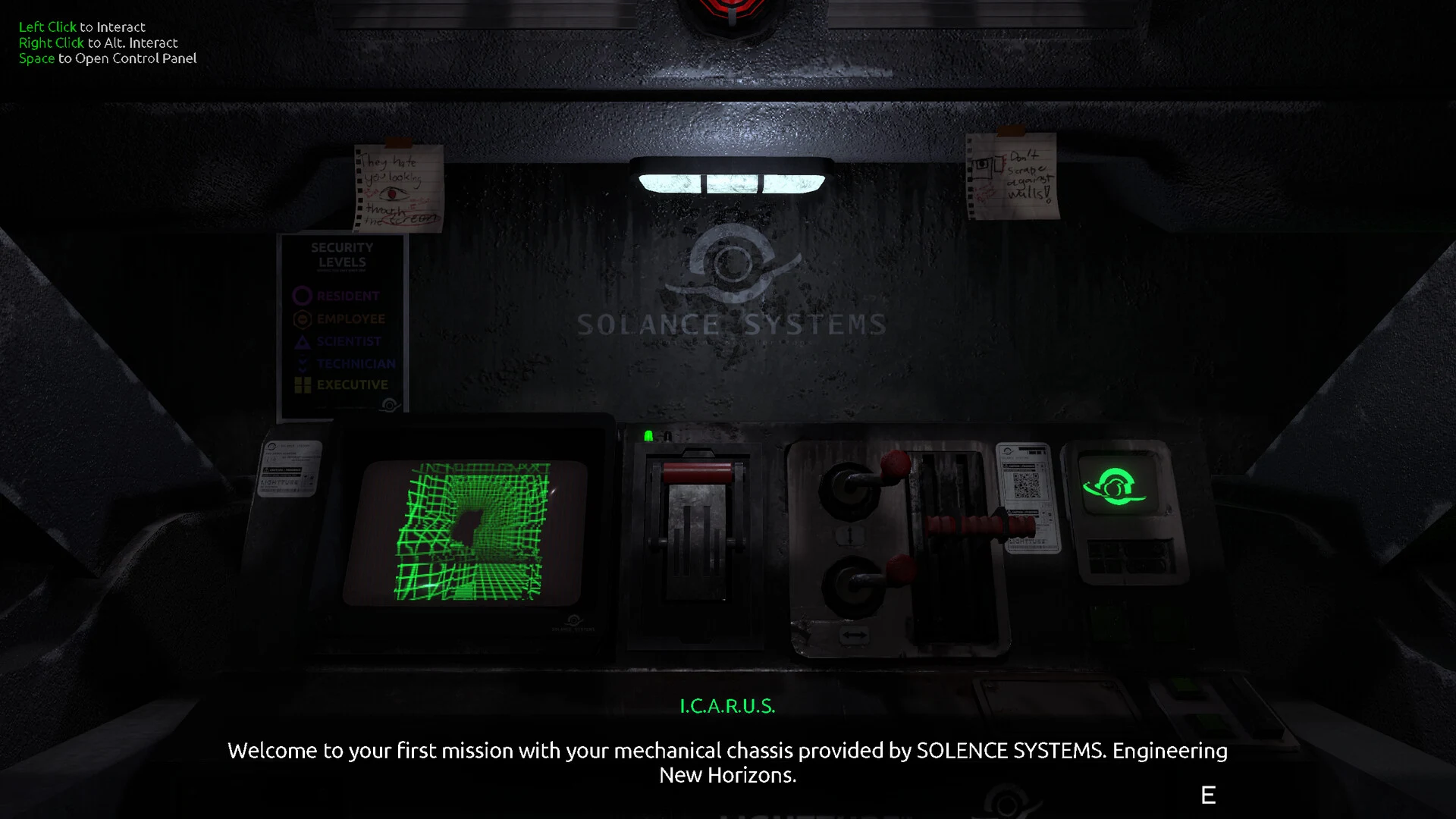
- FEED MY MECH story follows a mech pilot trapped inside an underground colony.
- Signals are central to exploration, investigation, and understanding the wider mystery.
- Solance Systems provides an important background thread for the colony and its purpose.
- Story progress depends on operating equipment, reading navigation information, and opening new routes.
- Ending preparation means exploring optional areas and preserving a save before late-game decisions.
FEED MY MECH Story Overview
The FEED MY MECH story places you inside a mech cockpit deep beneath the surface, surrounded by a deserted underground colony and limited visibility. The game combines environmental exploration, machine management, navigation, and horror. Instead of presenting its mystery through constant exposition, it encourages you to inspect equipment, follow Signals, investigate unusual locations, and connect repeated clues.
The central tension comes from being both mobile and confined. Your mech can travel through the colony, but the cockpit interface remains your main source of information. Maps, scanning tools, power readings, and interaction prompts shape how much of the world you can understand at any moment.
Treat every unusual machine, damaged structure, and unexplained environmental detail as a possible story clue. Optional exploration can improve your understanding even when it does not immediately change the main objective.
| Story Element | Role in the Narrative | What to Watch For |
|---|---|---|
| Underground colony | Main exploration setting | Blocked routes, abandoned infrastructure, and changes after major interactions |
| Mech cockpit | Primary viewpoint and survival interface | Power status, navigation data, scanner feedback, and interaction prompts |
| Signals | Important objectives and investigative leads | Locations, collection progress, and clues connected to the wider mystery |
| Infected machines | Major horror threat | Dangerous areas, retreat routes, and signs that the colony is no longer safe |
| Solance Systems | Background organization linked to the setting | Equipment, environmental clues, and information that explains the colony’s purpose |
The narrative is best approached as a chain of discoveries rather than a traditional mission list. You identify a route, examine the environment, operate a relevant device, and then verify what changed. That loop gradually reveals why the colony was abandoned and why the mech remains involved in the situation.
The Pilot
You experience the colony from inside a machine. The restricted viewpoint makes cockpit information essential for both survival and story interpretation.
The Colony
Abandoned tunnels and facilities function as both locations and evidence. The environment communicates history through layout, damage, and neglected machinery.
The Signals
Signals provide a clear investigative direction. Follow them carefully, but continue checking nearby areas for optional context and missable discoveries.
Story Progression Through the Colony
The main story advances when exploration leads to a meaningful interaction. The exact route may vary as you learn the colony’s layout, but the underlying progression pattern remains consistent: prepare the mech, locate the next objective, inspect the relevant area, operate equipment, and confirm that access has changed.
Do not assume that activating one device automatically completes an objective. After every major interaction, review the map, revisit nearby access points, and check whether a previously blocked route has become available.
After operating important equipment, always verify the result. Check the navigation interface, return to the affected route, and look for a new interaction instead of immediately traveling deeper into unknown territory.
Prepare Before Leaving
Check power, machine condition, navigation information, and the intended destination. Keep enough operational reserve for exploration and a safe return trip. A clear objective reduces wasted movement and prevents unnecessary detours.
Survey the Current Area
Search the accessible colony section for equipment, access points, damaged machinery, and environmental clues. Use the scanner with a purpose, especially around objects that appear connected to the current objective.
Find the Progression Device
Identify the equipment or interaction that can change the state of the area. If a prompt does not appear, reposition the mech, inspect the surroundings, and consider whether a previous objective must be completed first.
Confirm the New Route
After using the device, review the map and revisit nearby passages. Look for an opened access point, a changed objective, or a new location that was previously unavailable.
Advance Carefully
Enter the next section only after checking power and orientation. In dangerous areas, move with a specific goal and keep the route back to a known landmark in mind.
| Progression Phase | Main Question | Recommended Action |
|---|---|---|
| Preparation | Can the mech complete the trip and return? | Check power, condition, route, and objective |
| Investigation | What connects to the current objective? | Scan equipment, inspect structures, and read environmental clues |
| Activation | Which device changes the area? | Test relevant interactions and observe the result |
| Verification | Did progression actually occur? | Recheck the map, route, and nearby access points |
| Advancement | Is the next area safe to enter? | Confirm resources, orientation, and an escape route |
The game’s short main-story structure makes careful observation more valuable than rushing. If you become lost, return to the last confirmed landmark instead of choosing random branches. Reconstructing the progression chain is usually more efficient than spending power searching every corridor again.
Signals, Secrets, and Solance Systems Lore
Signals are among the most important story-facing elements in FEED MY MECH. They give exploration a clear purpose while directing attention toward the colony’s larger mystery. A Signal should not be treated only as a checklist item; its location, surrounding environment, and relationship to nearby equipment may provide context about what happened before the player arrived.
Optional discoveries support the same narrative structure. Side passages, wreckage, isolated machinery, and unusual environmental details can reveal information that is not required for immediate progression. These discoveries are particularly useful before late-game decisions, when a broader understanding of the colony can change how you interpret the available outcomes.
This guide keeps ending details broad. For the best first playthrough, investigate optional clues before opening any ending-specific material and preserve a separate save before the final irreversible sequence.
| Discovery Type | Where to Look | Story Value | Missable Risk |
|---|---|---|---|
| Signals | Objective areas and connected exploration routes | Advances the investigation and focuses the story | Medium |
| Side passages | Routes outside the direct objective path | May reveal optional context, equipment, or environmental evidence | High |
| Wreckage | Damaged structures and abandoned machinery | Shows the condition of the colony and its former activity | Medium |
| Repeated symbols | Locations with unusual visual details or messages | Can connect separate areas or events | High |
| Solance Systems clues | Equipment, facilities, and readable environmental elements | Helps explain the organization behind the setting | Medium |
Use a three-pass method when entering a new area:
- Pass one: route recognition. Identify the main path, nearby exits, and recognizable landmarks.
- Pass two: objective search. Scan equipment and inspect objects connected to the current Signal or task.
- Pass three: optional investigation. Check dead ends, unusual structures, and details that do not appear necessary for progression.
Low-Spoiler Search
Inspect visible objects, damaged machinery, and side paths before leaving an area. This approach reveals context without requiring knowledge of later events.
Clue Comparison
Note repeated symbols, messages, and environmental patterns. Separate clues become more useful when viewed as part of the same colony history.
Return Visits
Revisit earlier areas after major progression changes. New access routes or interactions may become relevant after equipment is activated elsewhere.
The story also benefits from reading the colony as evidence. Damage, isolation, and abandoned infrastructure are not merely atmosphere. They establish questions about the people or systems that used the site, the purpose of the underground facilities, and the conditions that allowed infected machines to become a threat.
Ending Preparation and Story Cleanup
The safest way to approach the final portion is to separate completion from interpretation. First, complete the required route. Then, before committing to the final sequence, inspect remaining optional locations, review unresolved interactions, and create a backup save.
Because the available reference material does not establish a verified count of endings or name every final branch, avoid relying on unconfirmed ending lists. The practical strategy is to preserve your options and test one late-game decision at a time.
Create a separate manual save before the final irreversible progression step. Keep the original backup untouched, then use additional slots for alternate choices and post-completion exploration.
| Cleanup Goal | When to Do It | Why It Matters |
|---|---|---|
| Inspect optional routes | Before final progression | Prevents easy-to-miss environmental clues |
| Review unresolved equipment | After major area changes | Some interactions may depend on progression state |
| Check Signals | Before the final sequence | Supports a more complete story interpretation |
| Create a backup save | Immediately before final decisions | Allows alternate routes without repeating the full game |
| Revisit completed areas | After finishing once | Makes missed details easier to identify |
Story Completion Checklist:
- Follow the main objective chain through the underground colony
- Investigate Signals and connected locations
- Inspect side passages, wreckage, and unusual machinery
- Review unresolved interactions before the final sequence
- Create a separate save before late-game decisions
A second run should change only one major decision or investigation condition at a time. This makes it easier to understand which action affected the result. If you change several variables at once, it becomes difficult to determine whether a different ending or scene came from a choice, an optional clue, or simple progression order.
The most useful post-completion questions are:
- Which locations were never visited?
- Which objects were visible but never inspected?
- Which Signal-related areas were left unexplored?
- Which interactions changed after equipment was activated?
- Which final choices were tested from the backup save?
This method turns a short horror adventure into a more deliberate lore investigation without requiring repeated blind runs.
FEED MY MECH Story FAQ
Use the story guide for narrative context, the walkthrough for direct progression help, and the secrets checklist when you are ready to investigate optional details.
Q: What is the FEED MY MECH story about?
It follows a mech pilot exploring a deserted underground colony while recovering Signals, managing limited operational resources, and investigating the machines and systems left behind. The story is delivered through exploration, environmental clues, equipment interactions, and the mystery surrounding Solance Systems.
Q: What are Signals used for in the story?
Signals provide important investigative objectives and help organize the player’s route through the colony. Their locations and surrounding clues can also improve your understanding of the wider mystery, so avoid treating them as isolated collection tasks.
Q: Does FEED MY MECH have confirmed multiple endings?
The available reference material supports an endings guide and late-game branch preparation, but it does not verify a complete ending count or official names for every outcome. Preserve a save before the final sequence and compare decisions carefully rather than relying on an unverified list.
Q: How can I avoid missing story clues?
Search side passages, inspect damaged machinery and unusual objects, use the scanner around relevant equipment, and revisit earlier areas after major progression changes. Create a backup save before the final sequence so you can explore alternate results safely.
For official platform and game information, consult the FEED MY MECH Steam page and the developer’s official itch.io page. Check the game’s current interface and control settings in 2026, since bindings and technical details may change.